For anyone who has received a transplant, or who is waiting for one, the fear of rejection is something that stays with you. After the initial relief of receiving a new organ, the reality of long-term monitoring begins: regular blood tests, clinic visits, and sometimes invasive biopsies to check whether the body is accepting or rejecting the transplanted organ. It can be an anxious time, and many patients and families wish there were simpler, earlier ways to know what is happening inside.
A UK clinical trial called SENTINEL, led by researchers at the University of Oxford, is now exploring a remarkably straightforward idea: what if a small patch of skin from the organ donor, transplanted onto the recipient’s arm at the same time as the organ itself, could act as an early warning system for rejection?
What is the SENTINEL trial?
According to the University of Oxford’s Nuffield Department of Surgical Sciences, the SENTINEL trial is a randomised controlled study looking at whether a small piece of donor skin, known as a sentinel skin flap, can help doctors spot organ rejection earlier and less invasively. The skin patch is transplanted onto the underside of the recipient’s forearm at the same time as the organ transplant. Because the skin comes from the same donor, it shares the same immune profile as the transplanted organ.
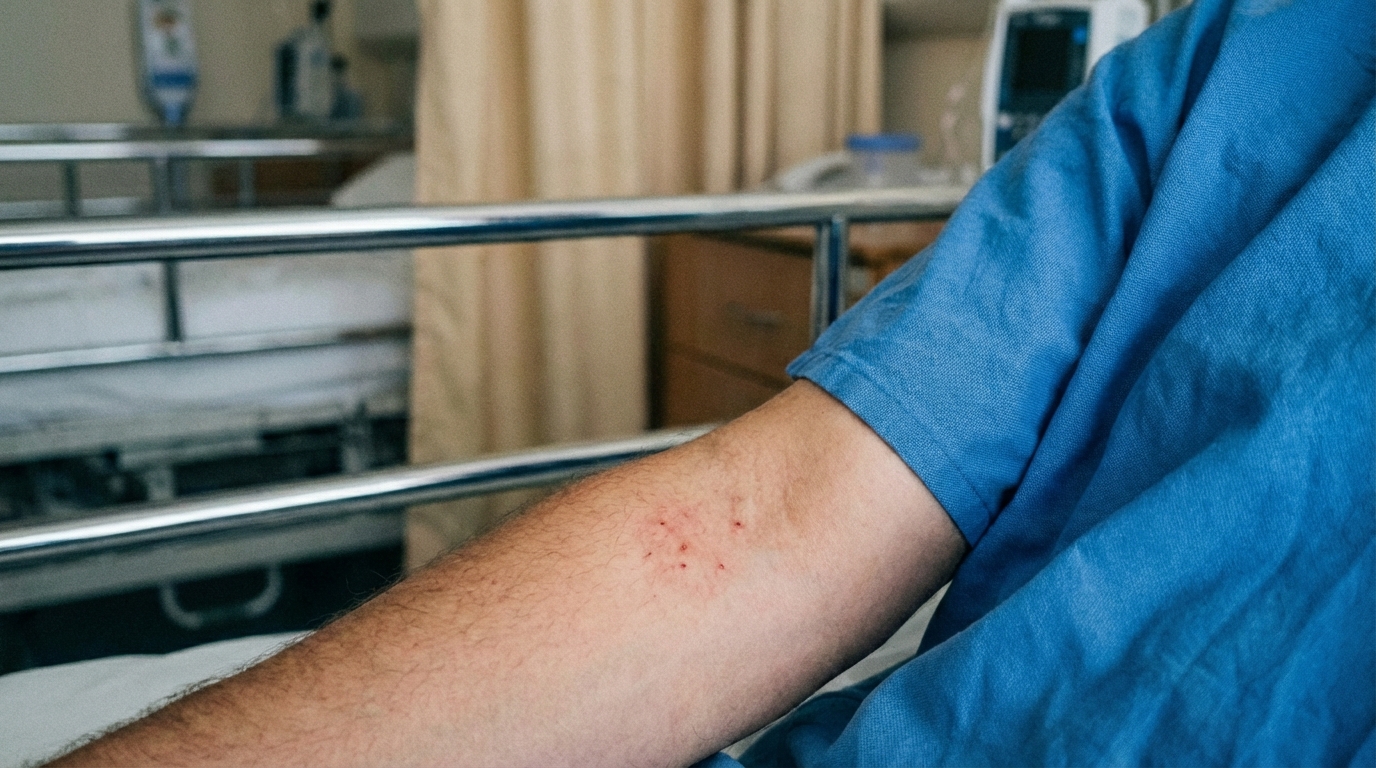
The idea is that if the body begins to reject the transplanted organ, the skin patch will show visible changes first – typically a red rash – giving clinicians an early, non-invasive signal that something may be going wrong. This could reduce the need for invasive biopsies, which are currently one of the main ways doctors check for rejection.
The SENTINEL trial is currently focused on lung transplant recipients, with recruitment open at five major UK cardiothoracic centres. It is funded jointly by the UKRI Medical Research Council and the National Institute for Health and Care Research (NIHR), and is led by Professor Henk Giele, a consultant plastic surgeon at Oxford.
You can read more about the SENTINEL trial from the University of Oxford here: SENTINEL – Surgical Intervention Trials Unit, Nuffield Department of Surgical Sciences.
Why this matters for kidney patients
Although SENTINEL is currently a lung transplant trial, the principle behind it is directly relevant to kidney transplantation and researchers are already exploring that connection. A study published in Transplantation Proceedings in 2025 tested the same concept in kidney transplant recipients. Twelve patients received a small donor skin graft alongside their kidney transplant, and researchers found that in at least one case, the skin patch showed signs of rejection while the patient’s blood tests were still normal. According to the study authors, the approach was safe and feasible, with no significant difference in kidney function between patients who received the skin patch and those who did not.
For people in Greater Manchester and the North West, it is worth noting that Wythenshawe Hospital – part of Manchester University NHS Foundation Trust – is one of the five UK centres recruiting for the SENTINEL lung trial. While kidney-specific trials using this approach have not yet been announced in the UK, having a local centre involved in the foundational research is encouraging. It means the expertise and infrastructure are already being developed close to home.
We know that many of our members live with the reality of post-transplant monitoring; the blood tests, the uncertainty between clinic appointments, and sometimes the anxiety of waiting for biopsy results. If a visible skin patch could eventually offer an earlier, gentler way to detect rejection in kidney transplants, that would be a meaningful step forward for patient experience as well as clinical outcomes.
What this does (and does not) mean right now
It is important to be clear: this is not yet available as part of routine kidney transplant care. The SENTINEL trial is still recruiting and collecting data, and the kidney-specific research published so far has involved small numbers of patients. Much more work is needed before sentinel skin patches could become a standard part of transplant care in the UK.
What it does show is that researchers are actively looking for less invasive, earlier ways to detect rejection and, that the idea works in principle. If future kidney transplant trials confirm the early findings, this approach could one day sit alongside blood tests and scans as another tool to help clinicians and patients manage transplant health more confidently.
If you have questions about your own transplant monitoring, your renal team remains the best source of advice.
Looking ahead
At MRIKPA, we welcome developments like this that aim to improve life after transplant. The idea that a small, visible patch of skin could help protect a transplanted kidney by flagging problems earlier is the kind of practical, patient-centred innovation that deserves attention even while it is still being tested.
We will continue to follow the progress of the SENTINEL trial and any future studies that explore this approach for kidney transplant recipients. If you would like to learn more about kidney research and how it affects patients, please visit our Patient Knowledge Bank or explore our latest news and research page.
Sources: University of Oxford, Nuffield Department of Surgical Sciences SENTINEL trial page; Rong X, Wang K, Tang J, et al. “A Novel Visible Method for Monitoring Kidney Rejection: Homologous Donor-Derived Sentinel Skin,” Transplantation Proceedings, June 2025.
This article is provided for general information and awareness purposes only and was believed to be accurate at the time of publishing. It is not intended as medical advice — please always consult your doctor or renal team for guidance on your individual circumstances. Images used are for illustration purposes only and may not be medically or editorially accurate. While we take every care, errors can occur. If you spot an inaccuracy, please let us know at support@mrikpa.org.uk.