For thousands of people in the UK living with kidney failure and relying on dialysis each day, news that an 84-year-old has become the UK’s oldest kidney donor came as both a remarkable surprise and a source of genuine hope. The prospect of finding a compatible living donor can feel very uncertain, and the waiting list for a deceased donor kidney can stretch for many years. During that time, life can feel as though it has been put on hold in ways that are difficult to fully describe to those who have not experienced it.
You can read the full original BBC article here: Man, 84, becomes oldest kidney donor in the UK.
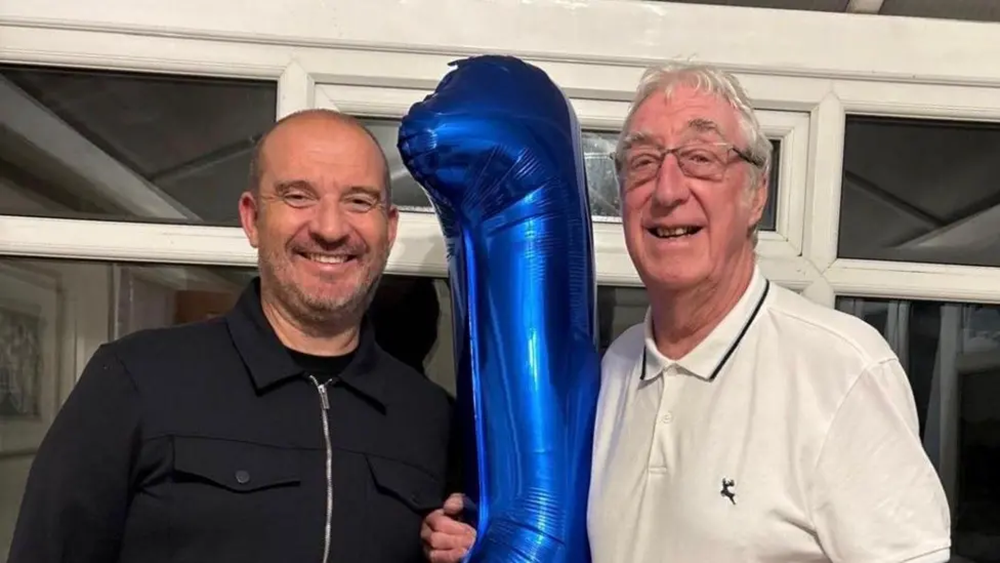
That is why the story reported by BBC News in late March 2026 resonated so widely across the kidney patient community. Graham Sisson, 84, from High Peak in North Derbyshire, donated a kidney to his son-in-law Ian Tonks, 49, at Manchester Royal Infirmary after an extraordinary eleven months of medical testing. Ian had been living with kidney disease for over two decades, and at the time of his transplant in November 2024, his health had declined to a genuinely critical point.
This is exactly the kind of story that reminds us why awareness around living kidney donation matters so much. For people waiting for a transplant in Greater Manchester and across the North West, knowing that potential donors can come forward at any age, with the right clinical support, can make a real difference to how patients and their families think about their options. We send our warmest congratulations to both Graham and Ian.
— Guy Hill, Chair of MRIKPA
How did the UK’s oldest kidney donor come forward?
Ian had received his first kidney transplant around twelve years earlier, but an autoimmune condition caused that organ to deteriorate over time. By 2018, he was relying on dialysis, and would go on to depend on it for six years before his transplant from Graham took place. Dialysis was affecting Ian’s life : he was unable to work, his hobbies became impossible to maintain, and unfortunately, his health also declined steadily during those years. Several members of his immediate family had been assessed as potential donors and found to be incompatible.
It was at that point that Graham stepped forward, despite being in his eighties. The article describes the extensive clinical assessment process that followed, covering close to a year of medical testing, before Graham was cleared to donate.
The operation was carried out at our very own Manchester Royal Infirmary in November 2024 with NHS Blood and Transplant since recognising Graham with a Kidney for Life Hero award.
Ian describes his life since the transplant as utterly transformed: he can attend concerts, go to football matches, and return to everyday pleasures that had been out of reach for years.
What the UK’s oldest kidney donor reveals about living donation at any age
At MRIKPA, we know that many of our members are either waiting for a transplant or feel uncertain about whether anyone in their network could realistically come forward as a donor. Years spent on dialysis can feel isolating and exhausting, and compatibility concerns can make living donation seem like an unlikely route. This story is an important reminder that medical fitness, rather than age alone, determines whether someone can become a living donor.
Graham’s case was assessed over a lengthy, rigorous clinical period, and the operation took place at Manchester Royal Infirmary, one of the leading transplant centres in the country and the very hospital at the heart of our MRIKPA community. For people in Greater Manchester and the North West, this is a particularly meaningful story, taking place on our own doorstep.
Thinking about living kidney donation: what to know before the conversation
While Graham’s achievement as the UK’s oldest kidney donor is genuinely inspiring, it is important to understand that every potential donor goes through an individualised and thorough assessment. Graham’s journey involved close to a year of medical evaluation before his donation could proceed. Age alone does not determine eligibility in either direction: each candidate is assessed on their individual health and fitness by a specialist renal team. If you or someone close to you is thinking about living kidney donation, your renal team is the best starting point for that conversation.
At MRIKPA, we will continue to follow developments in living donation and share stories that matter to our community. You can find out more about organ donation on our website, and explore our full archive of kidney research and patient stories on our Research and News page.
If this story has prompted questions, or if you simply want to speak with someone who understands what living with kidney disease is like, our volunteers are always ready to listen. Get in touch at support@mrikpa.org.uk or call us on 07745 242 684.
Source: BBC News, March 2026 — read the original article
This article is provided for general information and awareness purposes only and was believed to be accurate at the time of publishing. It is not intended as medical advice — please always consult your doctor or renal team for guidance on your individual circumstances. Images used are for illustration purposes only and may not be medically or editorially accurate. While we take every care, errors can occur. If you spot an inaccuracy, please let us know at support@mrikpa.org.uk.