
NHS Blood and Transplant has launched its first ever urgent response plan after a sharp decline in organ donation, with more than 8,700 people now waiting for a transplant. Kidney patients make up the majority of those waiting.
For MRIKPA members waiting for a kidney transplant, and for those whose lives have already been transformed by transplantation, the reasons behind the announcement matter.
NHSBT’s new plan is intended to stabilise organ donation in the short term and begin reversing its decline.
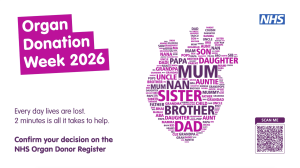
There is also something straightforward that all of us can do. NHSBT is asking people to record their organ donation decision, a process it says takes around two minutes, and, crucially, to tell their family what they have decided.
What has NHS Blood and Transplant announced?
On the first day of Organ Donation Week (21 to 27 September 2026), NHS Blood and Transplant (NHSBT) announced its first ever urgent response plan for organ donation and transplantation across the UK.
According to NHSBT, deceased donation is currently running around 9% below the same point last year. More than 8,700 people are waiting for an organ transplant, and NHSBT reports that nine people die each week while on the waiting list.
Two pressures are contributing to the decline.
Only around 1% of people in the UK die in circumstances where organ donation is possible, and the pool of potential donors has shrunk by around 20% since 2019/20. At the same time, family consent for donation has fallen from 67% in 2020/21 to 57% last year.
The immediate plan includes identifying and referring more potential donors, faster and more certain testing for neurological death, increasing consent rates and making the fullest possible use of every viable donation.
NHSBT is also developing longer-term measures, including increasing donation after circulatory death and strengthening living donation.
You can read the full announcement from NHS Blood and Transplant here: NHS announces first-ever urgent response following sharp decline in organ donation.
Why the organ donation decline matters for kidney patients
Kidney Research UK, drawing on NHSBT’s latest annual activity report, puts the number of people waiting for a kidney transplant at 7,203, including 138 children.
That means people waiting for a kidney account for the great majority of the more than 8,700 people currently waiting for any organ transplant in the UK.
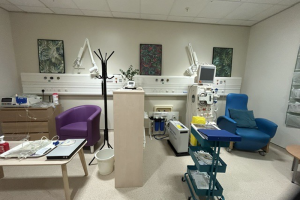
Closer to home, the regional kidney and pancreas transplant unit at Manchester Royal Infirmary performs more than 200 transplants a year, as our page on renal care at Manchester Royal Infirmary explains.
For transplantation following someone’s death, however, the generosity of a potential donor is only part of what needs to happen. Their family also needs to support donation, and that is far more likely when they know what their loved one wanted.
Why a recorded decision makes such a difference
Families support organ donation around 90% of the time when they know what their loved one wanted. When no decision is known, that falls to around 50%.
Between April 2021 and March 2026, more than 700 potential donations did not go ahead because families were unsure. NHSBT estimates that this represented around 2,127 missed transplant opportunities.
We have previously looked at why more families are declining to donate a relative’s organs, but these latest figures underline just how important the conversation within a family can be.
NHSBT shares the story of Ollie Jolliff, who received a liver transplant when he was just 11 months old in 2016.
His donor, 17-year-old Miriam Lee, had registered her decision and told her parents. When the moment came, they knew what Miriam wanted and were able to honour her decision.
Ten years later, Ollie competes every year at the British Transplant Games, where the two families now meet.
What this does, and does not, mean right now
It is important to be clear about what changes today for somebody waiting for a kidney.
NHSBT describes the urgent response as a package of accelerated measures designed to stabilise and recover organ donation, working with NHS Trusts across the UK. It also says reducing the transplant waiting list will require a collective effort across the NHS and wider society.
The announcement does not give a timescale for when these measures might increase the number of organs available for transplantation.
For somebody currently waiting for a kidney, it therefore does not change the advice or information provided by your own transplant or renal team. They remain the best source of guidance about your individual circumstances.
What the announcement does show is the seriousness with which the fall in organ donation is now being treated.
Two minutes, then one conversation
NHSBT is asking one million people who have never previously registered a decision to confirm their organ donation choice this year.
You can record your decision on the NHS Organ Donor Register or through the NHS App.
But registering is only half of the message.
Tell your family what you have decided.
For many MRIKPA members, transplantation has made possible years of life, family occasions, work, travel and experiences that might otherwise never have happened. Behind every one of those deceased-donor transplants was another family faced with an extraordinarily difficult moment.
Knowing what their loved one wanted can make that decision clearer.
Guy Hill, Chair of MRIKPA
“Many of our members are living full lives today because a donor’s family said yes. Hearing that consent is falling is hard, but the answer is within reach for every one of us. Confirm your decision, then tell the people closest to you what it is.”
At MRIKPA, we welcome NHSBT’s decision to act now, and we will continue to follow what happens as the urgent response plan is put into practice.
You can follow more stories like this on our research and news pages.
If this news has brought up feelings about your own wait, or you would simply like to talk with people who understand what living with kidney disease and transplantation can involve, you are always welcome to contact us at support@mrikpa.org.uk or call 07745 242 684.
Source: NHS Blood and Transplant, 21 September 2026. Read the original article here. Kidney waiting list figures: Kidney Research UK, 5 August 2026, here.
This article is provided for general information and awareness purposes only and was believed to be accurate at the time of publishing. It is not intended as medical advice. Please always consult your doctor or renal team for guidance on your individual circumstances. Images used are for illustration purposes only and may not be medically or editorially accurate. While we take every care, errors can occur. If you spot an inaccuracy, please let us know at support@mrikpa.org.uk.