
For many kidney patients, a transplant is the hope that keeps us going. Yet new NHS figures show that hope can take far longer to arrive for some of us than others, and South Asian organ donation is at the heart of the problem. Behind the numbers are families making generous, difficult decisions, and communities beginning to talk more openly about donation.
Organs are matched by blood and tissue type, so the closest match for a patient often comes from a donor of similar heritage. When there are too few donors from a particular background, patients from that background wait longer. It is a quiet inequality that many of our members will recognise.
What the NHS figures show about South Asian organ donation
According to NHS Blood and Transplant, just 26 deceased donors of South Asian heritage were recorded between April 2025 and March 2026, while 554 patients of the same heritage were waiting for a transplant. That is more than 20 times as many people waiting as there were donors. The figures also show that adults of Asian heritage wait an average of 648 days for a kidney, against a UK average of 547 days. For children of Asian heritage the average wait is 709 days, compared with 450 days across the UK.
The wider picture is stark. A record of more than 8,500 people are now on the UK transplant waiting list. In March 2026, patients of South Asian heritage made up 90.1 per cent of those listed for a kidney, against 86.4 per cent of the list overall. NHS Blood and Transplant notes that people of South Asian heritage are more likely to develop diabetes and high blood pressure, both of which can damage the kidneys.
Why the waits are longer
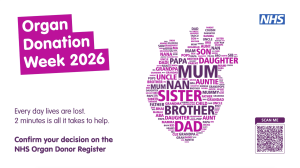
Part of the South Asian organ donation shortfall comes down to biology. Harpreet Matharu, a regional head of nursing at NHS Blood and Transplant, has explained that a shortage of close genetic matches makes long waits more likely, and that sadly some people waiting for a transplant will never receive one. She stressed how important it is to record your decision on the NHS Organ Donor Register, so that families can be certain of your wishes. Last year, according to the figures, 67 per cent of Asian heritage families agreed to donation where the person had already joined the register, compared with 85 per cent among all other ethnic groups. Confirming your decision, and telling your family, makes a real difference.
One family who chose to help others
The BBC report told the story of Sunni Bansal, who died suddenly in February at the age of 34. His mother, Bevi Sandhu, 55, from Hounslow in west London, agreed to donate his organs. His kidneys went to two men and his heart to a man of 30, and his family later learned that his donation had helped save three lives. Bevi has spoken about how donation felt like a way for a caring young man to go on helping others, and how having a letter about the donation read aloud at his Sikh funeral got friends and family talking about a subject their community rarely discusses. Her point was a simple one, that a single conversation can spark another.
Others in the community are adding their voices. Mehreen Ahmed, 25, who received a heart transplant three years ago, has said she had never heard of organ donation before she was placed on the waiting list, and would like to see more people from South Asian backgrounds start that conversation. During July, to mark South Asian Heritage Month, NHS Blood and Transplant encouraged more open conversation about South Asian organ donation and asked people to confirm their decision on the register. You can read more about the specific issues affecting South Asian and other communities and organ donation on our website, and find out how to register your own decision.
At MRIKPA, we know that conversations about donation are not always easy, and that for grieving families they come at the hardest of times. We are grateful to families like the Bansals who choose to help others, and we gently encourage everyone in our community, whatever their background, to think about organ donation and to make their wishes known. It is one of the most powerful things any of us can do for a fellow patient. You can follow more stories like this on our research and news pages.
Source: “South Asian donor shortage leaves long organ waits”, BBC News (Adriana Elgueta, BBC London), 27 July 2026. Read the original report here.
If you or someone close to you is living with kidney disease and you would value speaking with others who understand from the inside, you are always welcome to reach out. We are a small, patient-run community based at Manchester Royal Infirmary, and you can get in touch with us at support@mrikpa.org.uk or on 07745 242 684.
This article is provided for general information and awareness purposes only and was believed to be accurate at the time of publishing. It is not intended as medical advice. Please always consult your doctor or renal team for guidance on your individual circumstances. Images used are for illustration purposes only and may not be medically or editorially accurate. While we take every care, errors can occur. If you spot an inaccuracy, please let us know at support@mrikpa.org.uk.