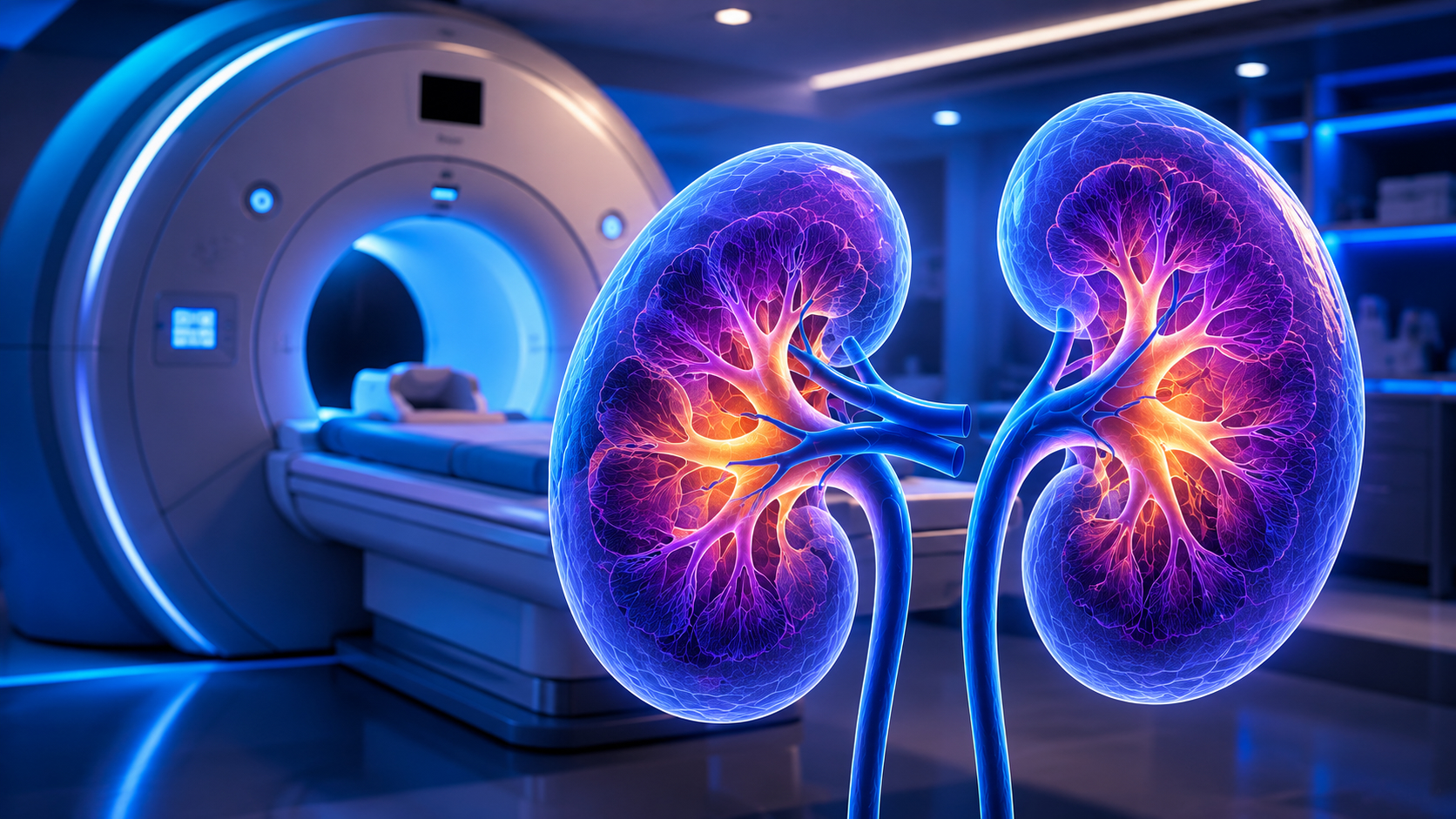
A new US study suggests that advanced MRI scans taken before kidney tumour surgery may help doctors identify which patients are more likely to experience a decline in kidney function afterwards. This is particularly significant for understanding MRI kidney function post-surgery, especially in relation to MRI kidney function assessment.
For people living with kidney disease, early warning can make a real difference. The sooner a change is noticed, the sooner care teams can monitor it, offer advice and take steps to protect remaining kidney function. That is the hopeful idea behind new research from Mount Sinai in New York, which explored whether MRI could reveal more about kidney health before surgery takes place.
Understanding MRI kidney function can lead to better patient outcomes and more tailored treatment plans, allowing healthcare providers to address potential issues before they escalate.
Looking beyond a standard scan
The significance of MRI kidney function lies in its ability to provide detailed insights into the health of the kidneys, which is essential for pre-surgical evaluations.
The work was led by researchers at the Icahn School of Medicine at Mount Sinai. Mira Liu, PhD, a postdoctoral fellow at the Mount Sinai BioMedical Engineering and Imaging Institute, received the W.S. Moore Award for Original Clinical Research at the 2026 ISMRM and ISMRT Annual Meeting for this research.
The award recognised her study, published in the Journal of Magnetic Resonance Imaging, which looked at whether advanced MRI measurements could help predict kidney function decline after nephrectomy. A nephrectomy is surgery to remove part or all of a kidney, often carried out to treat a kidney tumour.
What the study explored
Kidney tumour surgery can be lifesaving, but some patients later develop reduced kidney function. At the moment, doctors do not always have reliable ways to know in advance who is most likely to be affected.
In this pilot study, 43 patients had specialised research MRI scans before their operation, in addition to their usual clinical imaging. These advanced scans did not just show the shape or structure of the kidneys. They also measured signs linked to blood flow, oxygen use, inflammation, filtration and microscopic tissue characteristics.
The researchers then compared these MRI findings with each patient’s kidney function one year after surgery.
This correlation between MRI findings and kidney function is crucial, as it helps clinicians make informed decisions regarding surgical interventions and post-operative care focusing on MRI kidney function.
What the researchers found
The study found that MRI measurements taken before surgery helped predict which patients were more likely to have a decline in kidney function afterwards, and which patients were more likely to develop chronic kidney disease.
Ultimately, the potential to utilise MRI kidney function data in clinical settings could revolutionise the way kidney health is monitored and managed.
The researchers also found that combining MRI information with standard clinical assessments and blood test results gave a clearer picture of risk than routine checks alone.
One important finding was that both poorly functioning kidneys and kidneys that appeared to be working unusually hard before surgery were linked with greater risk later on. The researchers suggest this may reflect reduced “kidney reserve”. In simple terms, a kidney may appear to be coping, but only because it is already working under strain.
By leveraging MRI kidney function insights, healthcare professionals can better understand the underlying conditions affecting patient outcomes.
Why this matters
This does not mean that MRI can currently predict kidney disease for everyone. It also does not mean that people should avoid surgery for kidney tumours. The study was small, early-stage and focused on a specific group of patients preparing for kidney tumour surgery.
However, the findings are encouraging because they suggest that advanced MRI could one day help care teams identify people who may need closer follow-up after surgery. It may also help doctors plan kidney-protective strategies earlier, especially for patients whose kidneys are already under pressure.
What happens next?
This advancement in understanding MRI kidney function will enhance the overall approach to managing kidney health.
The Mount Sinai team plans to test the approach in larger groups of patients across several medical centres. Their longer-term aim is to develop a practical risk score that could be used alongside existing tests before surgery.
At MRIKPA, we are always encouraged to see research that may help people and their care teams plan ahead with more confidence. This is still early research, but it is a useful reminder of how imaging may one day help doctors understand not only what a kidney looks like, but how well it is coping.
As research progresses, the integration of MRI kidney function into clinical practice could lead to earlier interventions and improved patient care strategies.
If you are living with kidney disease, waiting for treatment, or supporting someone through their kidney journey, it can help to speak with people who understand. You are welcome to contact MRIKPA at support@mrikpa.org.uk or call 07745 242 684. You can also explore more support and information in our Patient Knowledge Bank.
Source: Mount Sinai, Icahn School of Medicine at Mount Sinai, 9 June 2026, “Could MRI Predict Kidney Disease Before It Develops? Award-Winning Study Suggests New Possibilities”.
The findings of this study support the need for further exploration into how MRI kidney function can be effectively applied in routine medical practices.
This article is provided for general information and awareness purposes only and was believed to be accurate at the time of publishing. It is not intended as medical advice. Please always consult your doctor or renal team for guidance on your individual circumstances. Images used are for illustration purposes only and may not be medically or editorially accurate. While we take every care, errors can occur. If you spot an inaccuracy, please let us know at support@mrikpa.org.uk.