For many of us living with kidney disease, the word “transplant” carries both hope and uncertainty. Behind every transplant is a donor, and behind every donor is a conversation that someone, somewhere, was brave enough to have. Those conversations are rarely easy. A new set of organ donor cards, designed by a Sheffield artist who knows the value of a transplant first hand, is trying to make them easier to begin.
How one artist turned his transplant into organ donor cards
According to a recent BBC News report, Sheffield illustrator Pete McKee has created a limited-edition run of organ donor cards for the 2026 British Transplant Games. McKee received a life-saving liver transplant in 2017, after a hereditary condition affected both his lungs and his liver. His designs draw on the character of his home city, including a steelworker pouring molten metal into a heart-shaped cask. He received his new liver from his donor, Mark Piotr, stays in close contact with the Piotr family, and took up golf for the Games because his donor loved the sport.
You can read the full original article from BBC News here: Artist who had transplant designs donor cards.
Why a card in a purse can change everything
The cards were commissioned to do far more than look beautiful. The BBC article shares the experience of Mahmud Nawaz, a director at Sheffield Teaching Hospitals NHS Trust and an ambassador for the Games, who lost his wife to a sudden brain haemorrhage in 2004 when she was just 32. Because she carried a donor card in her purse, the couple had already talked about organ donation, and he was able to say yes on her behalf at the hardest possible moment. Her donation went on to help four people, including a young boy who received part of her liver. It is a moving reminder that organ donor cards are really about starting a conversation long before it is ever needed.
What this means for kidney patients in our communities
At MRIKPA we see how long the wait for a kidney can be. The NHS Blood and Transplant service has noted that the UK transplant waiting list has reached record levels, with more than 8,300 people waiting for a life-saving transplant. The need is felt especially keenly in Black, Asian and minority ethnic communities, where people can be more likely to need a transplant yet less likely to have recorded a yes to deceased donation. Manchester, like Sheffield, is a wonderfully diverse city, so organ donor cards that help more families talk matter here. You can read more about donation in Black, Asian and minority ethnic communities on our website.
Cards spark the conversation, the register records your decision
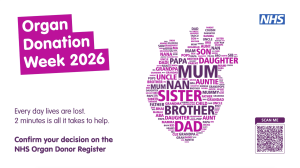
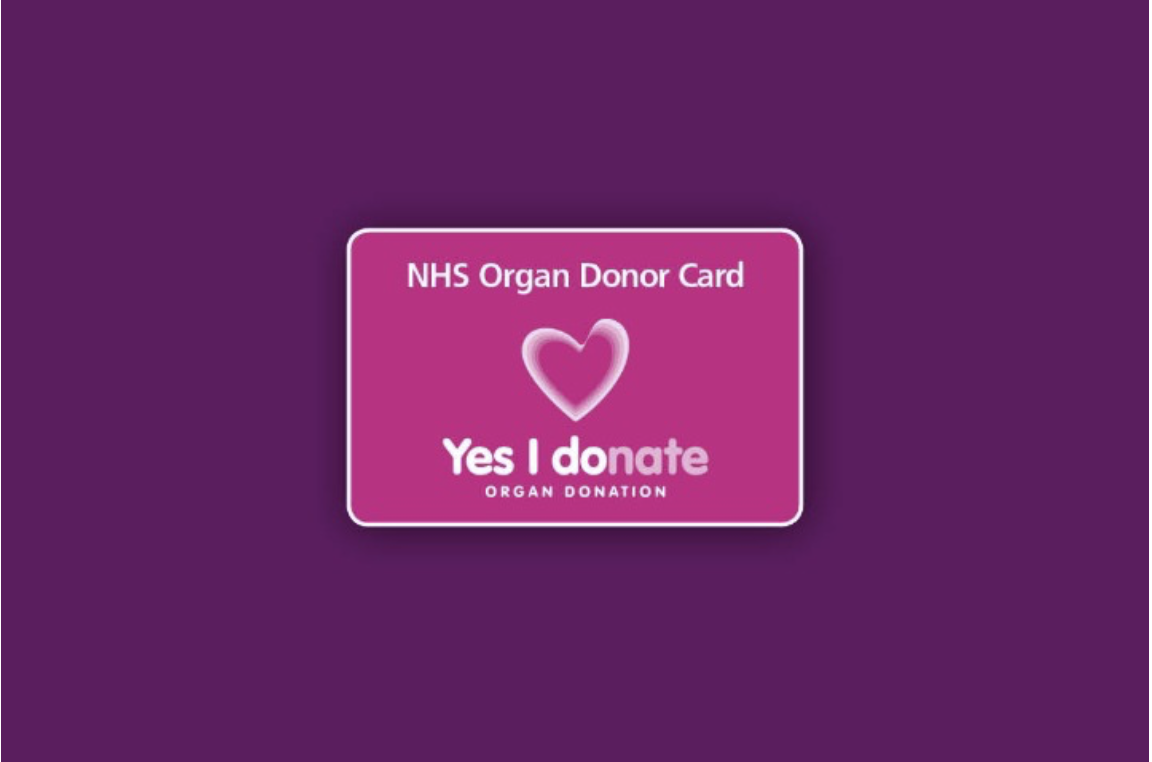
It is worth being clear about what these organ donor cards can and cannot do. Across the UK, organ donation now works on an opt-out basis, and the formal place to record your wishes is the NHS Organ Donor Register. A card, however lovely, does not replace that register. What it does beautifully is prompt the conversation, so that your loved ones know your wishes and feel confident speaking for you if they are ever asked. The cards will be handed out at venues around Sheffield in August, but the decision they encourage can be made by anyone, anywhere, today. You can also find out more about organ donation through our resources.
A project close to our hearts
MRIKPA has long championed the British Transplant Games and the donor families whose generosity makes transplantation possible. We were moved that organ donor cards could carry this much meaning, and the project sits alongside other artwork honouring organ donors that we have featured before.
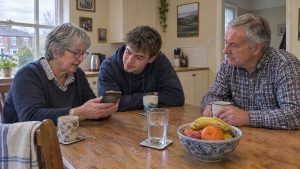
“A transplant gives you your life back, and none of that is possible without a donor and a family who said yes. If a piece of art helps one more family have that conversation around the kitchen table, then it has done something wonderful.”
– Guy Hill, MRIKPA Chair
If you or someone you love is on the transplant journey and would like to talk, our volunteers are always here. You can reach us at support@mrikpa.org.uk or on 07745 242 684, and you are warmly welcome to become a member of our community.
Source: BBC News, June 2026. Read the original article.
This article is provided for general information and awareness purposes only and was believed to be accurate at the time of publishing. It is not intended as medical advice. Please always consult your doctor or renal team for guidance on your individual circumstances. Images used are for illustration purposes only and may not be medically or editorially accurate. While we take every care, errors can occur. If you spot an inaccuracy, please let us know at support@mrikpa.org.uk.